
If you live in New Jersey and you are thinking about getting help, you likely have two big questions. What will this cost? Will my insurance help? This guide explains the addiction recovery journey in NJ in clear steps. You will learn what plans must cover, how parity protects you, and how to read costs like deductible, copay, and coinsurance. You will see what happens from the first call through week one in care. You will learn how to check if a New Jersey rehab center is Joint Commission accredited, and how to make sure you get PTSD support if you have trauma. Every link goes to an official source, so you can move with confidence. At the end, you get a one-page action plan you can use today. Ready for straight answers you can trust. Keep reading.
1) What insurance must cover for addiction care
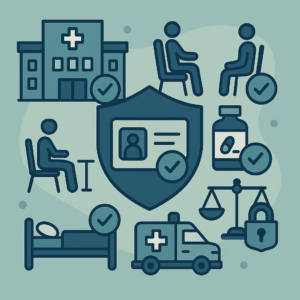
Most Marketplace and many employer plans must cover mental health and substance use services as essential health benefits. Plans cannot deny you due to a pre-existing condition. Plans cannot place yearly or lifetime dollar limits on these essential benefits. Read the federal summary here to see what this means for you in plain language.
Another key rule is the Mental Health Parity and Addiction Equity Act. Parity means your plan cannot make mental health or substance use care harder to access than medical or surgical care. This includes rules about prior authorization, visit limits, and how out-of-network claims are handled. See the federal parity pages here from CMS and DOL to learn your rights and who to contact if you face problems.
Checklist
- Confirm your plan covers substance use treatment as an essential health benefit.
- Ask your plan if any non-quantitative limits apply and why.
- If access seems harder than medical care, request the plan’s parity analysis using the contacts on the CMS or DOL pages above.
2) How costs work in 2025
For Marketplace plans in 2025, the out-of-pocket maximum cannot be higher than $9,200 for one person and $18,400 for a family. After you hit this cap for covered in-network care, the plan pays the rest of the covered costs for the year. This is the official limit from the federal glossary page.
Know the difference between deductible, copay, and coinsurance. Your deductible is what you pay each year before the plan starts to share costs. A copay is a set amount you pay for a visit. Coinsurance is a percentage of the allowed cost after your deductible. The federal glossary explains each term in simple language so you can check your plan and do the math with confidence.
Cost tips
- Ask if your visits will be a flat copay or a percent coinsurance.
- Track your out-of-pocket total each month so you know when you hit the cap.
- Ask if intensive outpatient needs preauthorization and how long approvals take.
3) New Jersey resources you can use today
New Jersey’s Division of Mental Health and Addiction Services oversees statewide supports for treatment and recovery. You can explore hotlines, treatment resource pages, and program definitions on the state site. Start at the DMHAS home and the addictions treatment resources page to see the landscape in one place.
4) Levels of care in NJ and why they affect your costs
Good programs match you to a level of care using the ASAM Criteria. This national framework supports person-centered plans and helps health plans approve the right intensity. Read the overview here so you know the terms your case manager and plan will use.
New Jersey publishes definitions for treatment programs. For adults, Intensive Outpatient is typically at least nine hours per week across several days. Partial care is higher intensity, often twenty or more hours per week. Knowing these terms helps you ask better coverage questions and prepares you for cost differences. See the NJ PDFs for definitions and service descriptions.
Ask your program
- Which ASAM level fits me today, and why?
- Will my plan require preauthorization for this level?
- Can I attend evening groups to accommodate work and childcare?
5) What to expect from your first call to week one
First contact and benefit check
You give your member ID and date of birth. The team verifies benefits and checks if your level needs prior authorization. Suppose you are uninsured or want to self-pay. In that case, you can request a Good Faith Estimate under the No Surprises Act, so you know the expected charges before starting. See the federal guide for consumers on Good Faith Estimates and the FAQs for details
Assessment and scheduling
A licensed clinician reviews risks, mental health symptoms, and supports. They match you to the right level using ASAM. You get a written schedule for your first two weeks and a cost outline. If you have trauma, ask how PTSD support is built into group and individual care. The VA and DoD guideline supports trauma-focused therapy for people with PTSD, even when there is a co-occurring substance use disorder, and treatment does not have to be delayed until full abstinence. Read the current provider PDF here.
Documents you should receive
- A benefits summary with deductible, copay, coinsurance, and out-of-pocket max.
- Authorization status if needed.
- A two-week treatment schedule.
- If self-pay, your written Good Faith Estimate with visit counts and codes.
6) Your rights that protect access and cost
Essential benefits and parity
Mental health and substance use services are essential benefits for most plans, and parity rules protect you from unfair limits. If your plan sets stricter rules for IOP than for similar medical services, ask for the plan’s comparative analysis and escalate using the contacts on CMS or DOL sites. These pages explain the rules and who can help if access is blocked.
Good Faith Estimate for self-pay
You have a right to a Good Faith Estimate if you are uninsured or choose to self-pay. If your bill is far above the estimate, there is a dispute process. Review the consumer page and training slides to see timelines and steps.
Action steps
- Ask about preauthorization before your first session.
- If denied, request the parity analysis and file an appeal with notes.
- If you self-pay, keep your Good Faith Estimate and compare it to each bill.
7) How to verify insurance like a pro
Call the number on your card and ask these exact questions. Keep answers in a phone note with today’s date.
Coverage questions to ask
- Is outpatient substance use treatment covered in the network near New Jersey, NJ?
- What are my deductible, copay, and coinsurance for outpatient, intensive outpatient, and partial care. See the federal glossary pages if terms are new: deductible, copayment, coinsurance.
- What is my out-of-pocket maximum for 2025, and how close am I to it now? Confirm the federal cap for Marketplace plans here.
- Do I need prior authorization for IOP or partial care. The federal uniform glossary defines preauthorization if you want the official wording.
- Which local providers are in network and taking new patients this month?
What to save
- The name and ID number of the person you spoke with.
- Screenshots of plan pages that show your benefits.
- Any prior authorization reference numbers.
8) PTSD support in your addiction recovery journey
Many adults who seek help for alcohol or drugs also carry trauma. Good care screens for PTSD and offers integrated treatment. The 2023 VA and DoD PTSD guideline supports trauma-focused therapies. It explains that people with PTSD and a substance use disorder do not need to delay PTSD treatment until full abstinence. That means you can address trauma and substance use together when it is safe and clinically sound. Read the current guideline summary and the provider PDF here to see how teams plan care for co-occurring needs.
SAMHSA’s TIP 57 explains how programs create trauma-informed settings. A trauma-informed program prioritizes safety, autonomy, trust, and collaboration. It shapes group rules, staff tone, and even room setup so people feel safe enough to learn skills. You can skim the manual or the resource page before your first visit so you know what good care looks like in practice.
Questions to ask
- How will PTSD screening and support be built into my plan?
- Do you offer CPT, EMDR, or PE, and can I attend in the evening?
- How do you coordinate PTSD care with my substance use treatment and medications?
9) Reading your Explanation of Benefits without stress
After visits, your plan sends an Explanation of Benefits, often called an EOB. This is not a bill. It shows the allowed amount for each visit, how much is applied to your deductible, and what you owe in copay or coinsurance. It also shows how much it counted toward your out-of-pocket maximum. Use the federal glossary to decode any terms you do not know: copayment, coinsurance, out-of-pocket maximum.
If the EOB shows a denial for missing authorization or medical necessity, ask the provider to resubmit with notes. At the same time, ask the plan about parity if the rule seems tougher than medical care. Use the CMS or DOL parity pages to frame the question and to request the comparative analysis if needed.
Bullet points to help
- Keep all EOBs in a folder on your phone.
- Match each EOB to your program’s receipts.
- Call the plan with the EOB in hand and write the name of the person who helps you.
10) Privacy and your records while you handle costs and coverage
Your plan and providers must follow HIPAA. For programs that fall under 42 CFR Part 2, your substance use treatment records have even stricter protections. Records usually need your written consent before they can be shared, and redisclosure is limited. These rules protect your privacy while you work on care and coverage. Read the HHS fact sheet and the SAMHSA FAQ for clear language you can use in forms and conversations.
Do this
- Keep employer paperwork focused on scheduling and leave, not diagnosis.
- Store your health records with your providers and plan, not at work.
- Ask your program to explain how it follows HIPAA and Part 2 in everyday steps.
11) One week in care for busy adults near New Jersey
Most adults begin with three to five touchpoints each week. In intensive outpatient, expect at least nine hours spread across several days. If you need partial care, expect longer daytime blocks that reach or exceed twenty hours weekly. These NJ terms come from state definitions used for coverage and contracting, which helps you set clear expectations on time and money.
Good programs share a written schedule for your first two weeks. They check your sleep, cravings, and stress. They coordinate with your prescriber if you take medication. They include PTSD support when trauma symptoms are present and do not put trauma work on hold when you are ready and it is safe to begin, in line with the VA and DoD guidelines.
Weekly rhythm
- 2 to 4 groups plus 1 individual session.
- One brief family or support check-in.
- Short home skills you can do on your phone between sessions.
- A five-minute money review to track what you paid toward your cap.
12) Step-by-step coverage call you can make today
You can do this in fifteen minutes. Get your card and call the number on the back.
Two simple paragraphs to guide you
First, ask if outpatient, intensive outpatient, and partial care are covered in the network near New Jersey, NJ. Ask for the deductible, copay, and coinsurance for each level. Ask if prior authorization is needed and how fast decisions are made once the provider sends notes. Confirm your 2025 out-of-pocket maximum and how close you are to it. Then write down the name and ID number of the person helping you and take a screenshot of any plan pages you view.
Second, ask how to find network providers with evening options. Ask if the plan prefers programs that are Joint Commission-accredited. If you are uninsured or wish to self-pay, review your Good Faith Estimate rights first so you can request a clear written estimate from the program before you start care. Use the official HHS page to see what must be included.
Bullet list for your call
- Coverage for outpatient, IOP, and partial care near New Jersey.
- Deductible, copay, coinsurance for each level.
- Prior authorization rules and timelines.
- 2025 out-of-pocket max and current running total.
- In network providers with evening blocks and telehealth.
13) How to double-check a program’s quality and fit
Ask how the program will handle your co-occurring needs. Ask how PTSD support is built into group and one-to-one care. Ask if they use ASAM Criteria to adjust your plan as life changes. These questions help you compare options and choose a New Jersey rehab center that fits your budget, your schedule, and your goals.
Questions to bring
- Are you Joint Commission accredited, and can you share the link to your listing?
- Which ASAM level are you recommending for me, and why?
- Do you offer trauma-focused therapies for PTSD in the evening or by telehealth?
- Will you provide me with a written schedule and cost estimate before I begin?
14) One-page action plan you can save
Two short paragraphs to move you forward
Open your wallet or browser. Find your plan card and call the number. Ask the coverage questions in Section 7 and write the answers in a note with today’s date. If you are uninsured or plan to self-pay, request a Good Faith Estimate before any visit so you can plan your budget. If you may qualify for NJ FamilyCare, start that application today.
Next, choose one local program to call. Ask to verify your benefits and ask for a written two-week schedule and a written cost estimate. If trauma matters for you, ask how PTSD support is built into the plan from day one.
Action checklist
- Verify benefits and ask about prior authorization.
- Confirm your 2025 out-of-pocket cap and track what you have paid.
- If self-pay, get a Good Faith Estimate in writing.
- Confirm Joint Commission accreditation in the public directory.
- Request evening or telehealth blocks to preserve work and family time.
Next step
Suppose you are near New Jersey and want an outpatient plan that treats addiction and mental health together while fitting work, school, and family. In that case, BlueCrest Counseling can help you check coverage and schedule a start date that works.