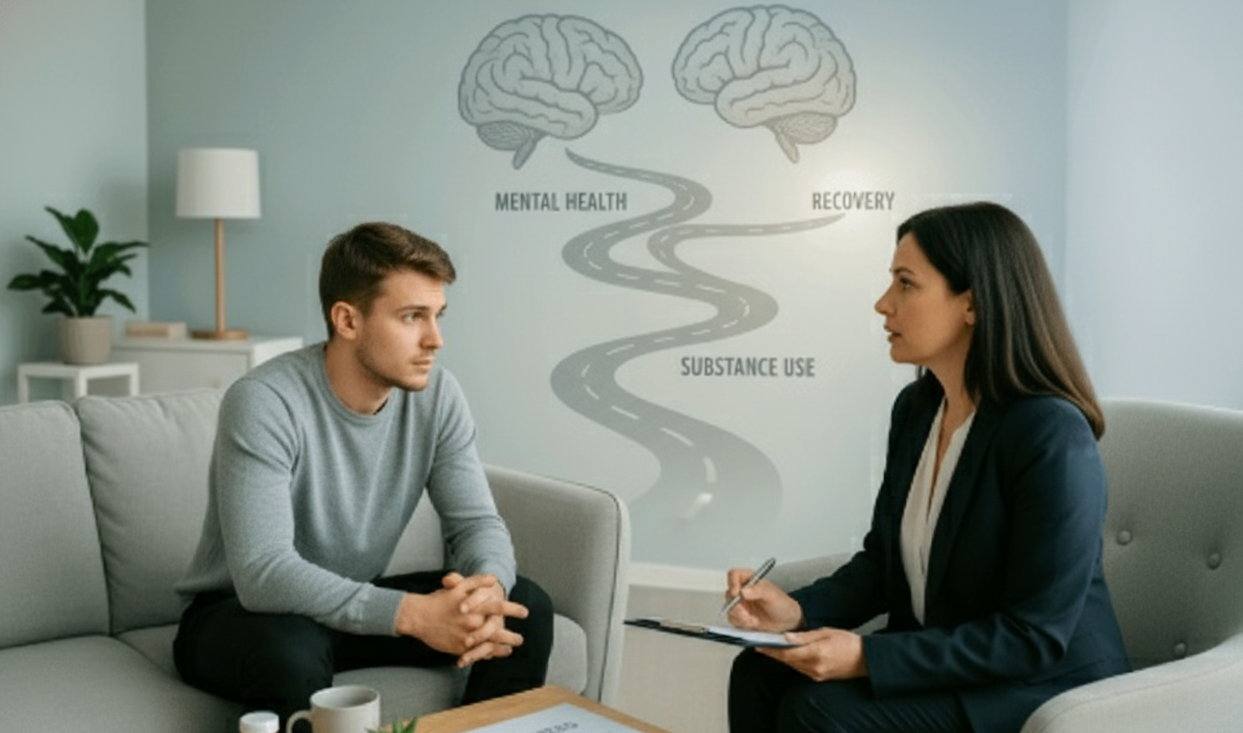
A SAMHSA study reveals that more than 10.4 million Americans have co-occurring disorders, a combination of addiction and mental health conditions. People often turn to drugs and alcohol to minimize symptoms of an emotional disorder, although this solution puts them in a vicious cycle of abuse. Without treatment, outcomes are often bleak.
Fortunately, there is a way to break this cycle. It’s called a dual diagnosis approach. Addiction specialists will determine if the underlying cause of addiction is related to a mental disorder and encourage coping strategies that allow patients to find healthy solutions to their problems.
This article explains this cause and approach method.
The Relationship Between Mental Health Disorders and Substance Abuse

A 2022 NIH review reveals that about 23.1% of U.S. adults experience mental illness, but only about 50% receive mental health services. Many self-medicate with drugs and alcohol instead. The following sections will reveal what’s behind this cycle.
Obstacles to Mental Health Services
People don’t get the help they need for the following reasons:
- Stigmas: Despite the growing awareness of the importance of mental health, stigmas still exist. People may feel embarrassed admitting they need help because they are afraid friends and family will view them differently. Instead, they keep quiet about their condition.
- Lack of Access to Care: Many people live in rural areas with limited medical care and mental health services. Others can’t afford these services.
- Denial: Some individuals with mental health disorders think their conditions aren’t that serious and refuse to get the care they need.
Why Many Turn to Self-Medication
Rather than get help, many people turn to drugs and alcohol to reduce their symptoms. For example:
- People with anxiety disorders may use benzodiazepines or opiates for their calming effect.
- Individuals who are depressed may use stimulants and alcohol for their temporary uplifting effects.
- Certain drugs may reduce the up-and-down effects of bipolar disorder.
- People may use drugs to forget about the trauma that feeds their addiction.
- Individuals may turn to drugs to calm the ‘voices’ in their head, a common side effect of psychotic disorders, bipolar disorder, and schizophrenia.
The Truth About Self-Medication
Although self-medication may temporarily relieve symptoms, it makes things worse in the long run. For example, many drugs worsen mental illness in the following ways:
- Alcohol: This central nervous system depressant can increase depression and anxiety, and chronic use has been linked to major depressive disorder.
- Stimulants: Worsen anxiety, panic attacks, irritability, aggression, and psychotic symptoms.
- Opioids: Linked to an increased risk of depression, withdrawal can cause anxiety and mood instability.
- Benzodiazepines: Although these are used to treat anxiety, abuse or withdrawal can worsen anxiety and depression.
Personal Issues Tied to Self-Medication
Self-medication also impacts personal situations, which can increase anxiety. For example, individuals with substance abuse problems often experience:
- Financial problems: Individuals spend money on drugs and are unable to pay for basic needs.
- Relationship issues: Fights with loved ones over addiction and its consequences make it difficult to maintain a supportive environment.
- Health conditions: Chronic substance abuse can lead to a weakened immune system and organ damage.
- Academic and career challenges: Addiction makes it difficult to complete assignments and can impact attendance records and performance, making it challenging to hold down a job or do well in school.
- Legal consequences: Individuals who struggle with sobriety may turn to crime to support their addiction. They also increase their risk of accidents, which may lead to legal consequences.
What is Dual Diagnosis?
Dual diagnosis is a therapy approach that addresses co-occurring conditions, typically a mental health disorder and a substance abuse disorder. A 2017 peer-reviewed study of 804 patients with dual diagnoses demonstrates the effectiveness of this approach. Two-thirds of participants remained in remission, and intoxication rates fell by 88% – 90% over the course of a year.
The idea of the treatment is to break the cycle of addiction at its root. A mental health expert will then determine the best approach moving forward, choosing from various evidence-based psychological approaches.
What is Involved in Dual Diagnosis?
The first step of most substance abuse programs is detox. The specialist will conduct an assisted detox to address the physical symptoms of addiction. This is typically a supervised process that ensures optimal patient comfort and reduces the risk of relapse.
Then, the specialist will determine the best approach for treating the underlying conditions that fuel addiction.
Popular Dual Diagnosis Therapies
Therapies commonly included in dual diagnosis include the following:
- Cognitive Behavioral Therapy (CBT) aims to identify and change negative thought patterns that may be contributing to dangerous behavior.
- Dialectical Behavioral Therapy helps people develop skills to manage intense emotions without turning to drugs and alcohol.
- Contingency Management —rehab facilities reward positive behaviors with gift cards, prizes, and vouchers, replacing drugs in stimulating the reward section of the brain, encouraging them to maintain healthy behavior.
- Motivational Enhancement- specialists motivate the person to achieve sobriety goals and focus on self-efficacy to improve self-esteem
- Support Groups, which may include 12-step groups and other types of group therapy, aim to provide the individual with a supportive environment and let them know they are not alone.
- Family Therapy- Families are often included in the therapy process so they can identify enabling behavior and understand the best way to support their loved one in recovery.
- Trauma Therapy- Addresses trauma that may be the underlying cause of addiction. Popular approaches include CBT, exposure therapy, eye movement desensitization and reprocessing (EMDR), narrative therapy, and mindfulness-based therapy.
- Medically Assisted Therapy (MAT): Medications can be used to curb drug cravings, reduce withdrawal symptoms, and aid with depression and anxiety.
What are the Benefits of Dual Diagnosis?
Dual diagnosis is a highly-regarded addiction treatment, offering the following benefits:
- Better Long-Term Outcomes: Dual diagnosis addresses addiction at its root and helps individuals develop coping strategies so they can better handle their emotions, decreasing the risk of relapse.
- Personalized Treatment: A dual diagnosis approach requires specialists to consider the factors that lead to addiction, ensuring a personalized approach that is customized to the patient’s needs. A tailored plan typically makes patients more receptive to treatment, leading to better outcomes.
- Stronger Support Systems: Peer group and family therapy are typically included in dual diagnosis treatment, creating strong support systems that increase the likelihood of sustained recovery.
- Enhanced Coping Skills: Patients learn coping skills that improve overall mental health and resilience.
- Higher Success Rates: A 2023 review of 11 studies found that dual diagnosis treatment outperformed non-integrated treatment, resulting in better mental health outcomes.
BlueCrest Counseling Encourages a Dual Diagnosis Approach
BlueCrest provides the counseling patients need to overcome addiction. We assess each patient to identify the underlying cause of substance abuse. A dual diagnosis approach is often integrated for higher success rates.
We treat various addictions, ensuring a customized approach. Our facility offers a safe, judgment-free space and ongoing support. Contact us for the assistance you need in reaching your recovery goals.
FAQs
What are the challenges in treating co-occurring disorders?
Treating co-occurring disorders can be challenging in that you must accurately diagnose the underlying cause of addiction. This can be difficult as symptoms often overlap. Specialists may also encounter obstacles if patients are resistant to treatment.
Can dual diagnosis be cured?
There is no cure for mental illness, but it can be managed with ongoing therapy and medications. Many people with co-occurring disorders go into remission and lead fulfilling lives.
How can friends and family support someone with a dual diagnosis?
Families can support a loved one with a dual diagnosis by creating a stable environment, educating themselves about disorders, and attending family therapy.
How prevalent are co-occurring disorders?
According to SAMHSA, approximately 9.5 million adults in the U.S. had co-occurring mental health disorders.
Where can individuals find help for dual diagnosis?
Dual diagnosis support is available at various recovery facilities and through mental health professionals and support groups.